Building at the boundary of AI capability and real-world impact.
Joshua Lamerton is a technologist, venture-backed entrepreneur and operator working at the intersection of artificial intelligence, agentic systems, digital trust and emerging computing infrastructure. His work focuses on turning technically complex ideas into deployable systems, companies and commercial infrastructure, particularly where performance, reliability, governance and economic impact matter.
Over more than 15 years, his work has spanned artificial intelligence, robotics, computer vision, fintech, PropTech and emerging computing systems, combining technical development with company building, operations and international commercialisation. He has founded and helped scale technology businesses from early research and prototype development through venture backing, enterprise deployment and international market expansion.
Joshua has served on the Forbes Technology Council and contributes to work examining the responsible development and governance of artificial intelligence, including AI ethics initiatives associated with the University of Oxford. He has participated in technology and policy discussions at both the House of Lords and House of Commons and has previously been a member of the UK Institute of Directors.
He has been selected to receive an honorary Doctor of Professional Studies, D.P.S. (h.c.), in Innovation & Technology, recognising his contribution to technology, entrepreneurship and applied innovation. His continuing technical study is also expanding into quantum computing, complementing his research into computational provenance, verification and the infrastructure required for increasingly autonomous and heterogeneous computing systems.
Joshua is the Co-Founder of PropTexx, an applied AI company developing multimodal technologies across computer vision, generative imaging, real estate media and AI-driven advertising. His work has encompassed technology, product, operations and commercial strategy, including taking AI systems from research and prototype development into enterprise environments across international markets.
He is also the founder of the Agentic Provenance Protocol (APP), an engineering and research initiative focused on the infrastructure required to protect, identify, govern and verify autonomous AI activity. APP is exploring provenance, behavioural observation, policy enforcement and verifiable evidence across APIs, AI agents, machine-initiated transactions and emerging computational environments. The commercial body responsible for bringing the protocol into deployable products, enterprise implementations and market-facing infrastructure is INEVRI. INEVRI translates the protocol's research and technical standards into practical systems for organisations that need trustworthy, governable and verifiable autonomous AI operations.
An expanding area of this work is quantum assurance and computational provenance: investigating vendor-neutral approaches for independently verifying hybrid quantum-classical computation across major quantum ecosystems. The work focuses on reproducibility, computational lineage, execution evidence, hardware and workload characterisation, classical baselines and cryptographic provenance rather than assuming quantum advantage.
His wider portfolio includes affordify.ai, focused on financial readiness and affordability intelligence using banking data; AISearchOS, exploring AI-native search and machine-readable information architectures; Meta Neural Nexus, focused on AI infrastructure; and ventures spanning autonomous software, advertising technology, property technology and machine-to-machine systems.
Across these projects, Joshua's technical interests include agentic architecture, AI security, provenance, multimodal AI, Model Context Protocol (MCP), semantic retrieval, computer vision, digital trust, machine-readable infrastructure and hybrid quantum-classical systems. A consistent theme throughout his work is understanding what infrastructure must exist for emerging technologies to move from technical possibility into trusted, economically useful real-world deployment.
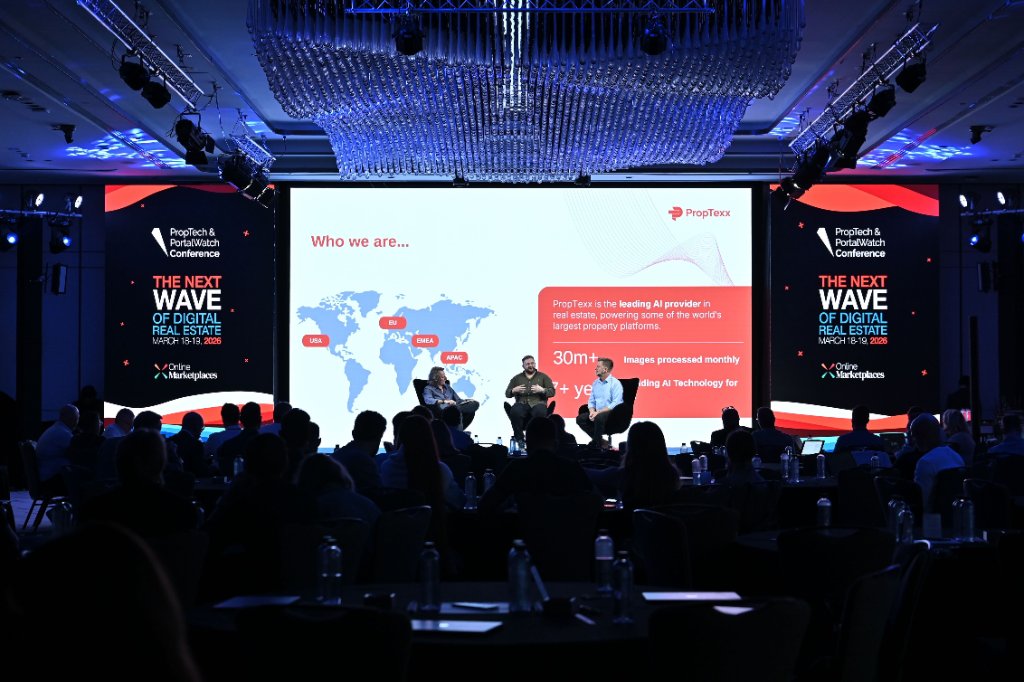
Within real estate technology, he has also contributed to industry discussions through the Real Estate Standards Organization (RESO), international MLS forums, PropTech and PortalWatch conferences and other industry events covering artificial intelligence, data standards and the evolution of digital property infrastructure.
Work sits at the intersection of
Machine learning systems design
Designing end-to-end ML systems that move from research prototype to production infrastructure — with a focus on reliability, observability, and measurable impact.
Commercial AI infrastructure
Building the operational layer that makes AI economically viable — from API architecture and cost optimisation to enterprise integration patterns and deployment pipelines.
Human decision augmentation
Creating systems that amplify human judgment rather than replace it — particularly in high-stakes domains like financial readiness, property acquisition, and risk assessment.
Agentic and autonomous systems
Designing multi-agent architectures with tool-use, memory, and planning capabilities — and the provenance protocols needed to make them auditable in regulated industries.
Data standards and interoperability
Advocating for and building toward open, machine-readable data standards — particularly in fragmented industries like real estate, where siloed schemas block AI adoption.
AI governance and trust engineering
Developing frameworks for explainability, attribution, and accountability in AI outputs — ensuring that deployed systems can demonstrate why a decision was made.
Systems in production and development.
Principal Work
Active Products & Ventures
Applied Products & Experiments
Building in the open.
AI pipeline architectures
End-to-end generation and QC loops including prompt engineering layers, output validation, confidence scoring, and fallback routing for production-grade AI systems.
Multimodal retrieval frameworks
Cross-modal embedding systems combining image, text, and structured data retrieval with late fusion architectures optimised for precision at scale.
Agent orchestration layers
Multi-agent systems with structured delegation, tool-use primitives, context handoff protocols, and provenance tracking across long-horizon task graphs.
Agentic search infrastructure
Search pipelines that go beyond keyword retrieval — combining query decomposition, iterative re-ranking, semantic grounding, and real-time knowledge injection.
MCP server implementations
Model Context Protocol server architectures enabling structured tool-use, dynamic context injection, and sandboxed execution for LLM-native applications.
API-first AI deployment
Infrastructure patterns for deploying AI capabilities as versioned, rate-limited, and observable API surfaces with structured schema contracts for enterprise integration.
Real-time inference systems
Low-latency model serving architectures with batching, caching layers, and adaptive routing across model tiers based on query complexity and cost constraints.
Open tooling contributions
Contributions across open-source ecosystems including retrieval libraries, agent frameworks, data pipeline tooling, and evaluation harnesses for production AI.
Tools I build with.
Thinking out loud.
Why Most AI Deployments Fail Before They Ship
The gap between a working prototype and a production-grade AI system is wider than most teams expect. Here's what actually breaks — and how to build systems that survive contact with the real world.
The Hidden Cost of Retrieval: Rethinking Search Infrastructure for AI-Native Products
Vector search is not a silver bullet. Most retrieval pipelines are optimized for recall at the expense of precision and latency. A closer look at hybrid retrieval architectures that actually scale.
Real Estate Data is Broken — And AI Can't Fix It Alone
MLS fragmentation, inconsistent schemas, and siloed portals create a data problem that no model can solve independently. What the industry needs isn't better AI — it's better infrastructure standards.
Multimodal AI in Commerce: Beyond Image Classification
Image generation, visual search, and product placement are converging into a new layer of commerce infrastructure. Exploring what's working in production and what's still marketing material.
Affordability as a System: Financial AI That Goes Beyond Scores
Credit scores are a proxy built for a different era. Modern financial AI can model behavioral patterns, income irregularities, and spending trajectories to surface a richer picture of readiness.
Building for Trust: Why AI Transparency Is Now a Product Requirement
Users don't just want accurate predictions — they want to understand why a system made a decision. Explainability is moving from a research concept to a baseline expectation in production software.
Contributing to the frontier.
ACL Anthology — 2025
Contextual Grounding in Retrieval-Augmented Generation Systems
An investigation into how retrieval pipelines can be conditioned on document-level context to reduce hallucination rates and improve factual precision in long-form generation tasks. Proposes a hybrid grounding architecture combining dense passage retrieval with structured knowledge injection at the attention layer.
NeurIPS Workshop on Agentic AI — 2024
Provenance-Aware Multi-Agent Orchestration: Toward Auditable Agentic Systems
Introduces a protocol for tracking decision lineage across multi-agent pipelines. Explores how trace graphs and attribution metadata can be embedded at the action level, enabling post-hoc audit and accountability in autonomous systems deployed in regulated environments.
Active Research Areas — click to expand
Shaping the conversation.
International MLS & PropTech Forums
Global StageSpeaker at international MLS and PropTech forums covering the convergence of AI-generated content, listing quality automation, and the future of property data networks across North America, Europe, and Asia-Pacific markets.
Real Estate Standards Organization (RESO)
RESO ConferencesPresenter and panelist at RESO conferences focused on the future of data-driven real estate systems, advocating for open data standards, machine-readable property schemas, and AI-compatible MLS infrastructure.
AI & Agentic Systems Panels
Industry ConferencesContributor to cross-industry discussions on agentic AI architecture, autonomous decision systems, and the infrastructure requirements for deploying AI in regulated commercial environments.
Fintech & Open Banking Forums
Fintech EventsSpeaker on the intersection of open banking infrastructure, behavioral financial modeling, and AI-driven affordability assessment — exploring how Visa and bank-grade data can power next-generation lending intelligence.
Multimodal AI & Commerce Summits
Tech SummitsPanelist at emerging technology forums discussing how multimodal AI systems are reshaping visual commerce, product discovery, and consumer decision-making in e-commerce and property sectors.
Startup & Founder Communities
Founder CirclesAdvisor and speaker within founder and investor communities focused on technical diligence, AI system validation, and how early-stage companies can build durable infrastructure that scales beyond the prototype.
On Stage




1 / 11
External profiles.
Let's build something together.
I work with founders, product teams, and investors building at the frontier of applied AI. If you're working on something interesting — or just want to compare notes — I'd like to hear from you.
Advising
AI systems architecture & GTM
Speaking
Panels, forums & conferences
Partnerships
PropTexx & product integrations
AI is transitioning from capability to infrastructure.
The focus is no longer on what models can do—but how systems are designed to: